On March 5 2010, Channel 4 aired an episode of Dispatches entitled "The Children of Gaza". It focused on the lives of a few of the children living in that small strip of Palestinian land whose lives were devastated when, 15 months ago, Israel launched its military attack on their homes, killing many of their parents and relatives, and shattering their already fragile existences. It showed how they have bravely tried to deal with their losses and bereavements and have tried to move on with their lives, and simultaneously how Israel has ensured that this is well near impossible as a result of the children’s literal incarceration in Gaza due to Israel’s illegal and ongoing siege. The documentary focused on how they have been struggling to deal with the fallout of their physical injuries as well as their psychological scars which, in all probability, they will never fully recover from. For once, this documentary was an opportunity for the children of Gaza themselves to speak out and to tell their own stories instead of it being told on their behalf by propagandists with a vested interest in how these children are portrayed. Listen to the Children.
Scratch a counterintelligence officer in the U.S. government and they'll tell you that Israel is not a friend to the United States. ByChristopher Ketcham March 2010
This is because Israel runs one of the most aggressive and damaging espionage networks targeting the U.S.. The fact of Israeli penetration into the country is not a subject oft-discussed in the media or in the circles of governance, due to the extreme sensitivity of the U.S.-Israel relationship coupled with the burden of the Israel lobby, which punishes legislators who dare to criticize the Jewish state. The void where the facts should sit is filled instead with the hallucinations of conspiracy theory -- the kind in which, for example, agents of the Mossad, Israel’s top intelligence agency, engineer the 9/11 attacks, while 4,000 Israelis in the Twin Towers somehow all get word to escape before the planes hit. The effect, as disturbing as it is ironic, is that the less the truth is addressed, the more noxious the falsity that spreads.
Israel's spying on the U.S., however, is a matter of public record, and neither Israel runs one of the most aggressive and damaging espionage networks targeting the U.S., yet public discussion about it is almost nil. conspiracy nor theory is needed to present the evidence. When the FBI produces its annual report to Congress concerning "Foreign Economic Collection and Industrial Espionage," Israel and its intelligence services often feature prominently as a threat second only to China. In 2005 the FBI noted, for example, that Israel maintains "an active program to gather proprietary information within the United States." A key Israeli method, said the FBI report, is computer intrusion. In 1996, the Defense Intelligence Service, a branch of the Pentagon, issued a warning that "the collection of scientific intelligence in the United States [is] the third highest priority of Israeli Intelligence after information on its Arab neighbors and information on secret U.S. policies or decisions relating to Israel." In 1979, the Central Intelligence Agency produced a scathing survey of Israeli intelligence activities that targeted the U.S. government. Like any worthy spy service, Israeli intelligence early on employed wiretaps as an effective tool, according to the CIA report. In 1954, the U.S. Ambassador in Tel Aviv discovered in his office a hidden microphone "planted by the Israelis," and two years later telephone taps were found in the residence of the U.S. military attaché. In a telegram to Washington, the ambassador at the time cabled a warning: "Department must assume that all conversations [in] my office are known to the Israelis." The former ambassador to Qatar, Andrew Killgore, who also served as a foreign officer in Jerusalem and Beirut, told me Israeli taps of U.S. missions and embassies in the Middle East were part of a "standard operating procedure."
According to the 1979 CIA report, the Israelis, while targeting political secrets, also devote "a considerable portion of their covert operations to obtaining scientific and technical intelligence." These operations involved, among other machinations, "attempts to penetrate certain classified defense projects in the United States." The penetrations, according to the CIA report, were effected using "deep cover enterprises," which the report described as "firms and organizations, some specifically created for, or adaptable to, a specific objective." At the time, the CIA singled out government-subsidized companies such as El Al airlines and Zim, the Israeli shipping firm, as deep cover enterprises. Other deep cover operations included the penetration of a U.S. company that provided weapons-grade uranium to the Department of Defense during the 1960s; Israeli agents eventually spirited home an estimated 200 pounds of uranium as the bulwark in Israel’s secret nuclear weapons program. Moles have burrowed on Israel’s behalf throughout the U.S. intelligence services. Perhaps most infamous was the case of Jonathan Pollard, a Jewish-American employed as a civilian analyst with the U.S. Navy who purloined an estimated 800,000 code-word protected documents from inside the CIA, the Defense Intelligence Agency, and numerous other U.S. agencies. While Pollard was sentenced to life in prison, counterintelligence investigators at the FBI suspected he was linked to a mole far higher in the food chain, ensconced somewhere in the DIA, but this suspected Israeli operative, nicknamed "Mr. X," was never found. Following the embarrassment of the Pollard affair -- and its devastating effects on U.S. national security, as testified by then Defense Secretary Caspar Weinberger (who allegedly stated that Pollard "should have been shot") -- the Israeli government vowed never again to pursue espionage against its ally and chief benefactor.
Fast-forward a quarter century, and the vow has proven empty. In 2004, the authoritative Jane's Intelligence Group noted that Israel's intelligence organizations "have been spying on the U.S. and running clandestine operations since Israel was established." The former deputy director of counterintelligence at FBI, Harry B. Brandon, last year told Congressional Quarterly magazine that "the Israelis are interested in commercial as much as military secrets. They have a muscular technology sector themselves." According to CQ, "One effective espionage tool is forming joint partnerships with U.S. companies to supply software and other technology products to U.S. government agencies."
Best-selling author James Bamford now adds another twist in this history of infiltration in a book published last October, "The Shadow Factory," which forms the latest installment in his trilogy of investigations into the super-secret National Security Agency. Bamford is regarded among journalists and intelligence officers as the nation’s expert on the workings of the NSA, whose inner sanctums he first exposed to the public in 1982. (So precise is his reporting that NSA officers once threw him a book party, despite the fact that he continually reveals their secrets.) The agency has come a long way in the half-century since its founding in 1952. Armed with digital technology and handed vast new funding and an almost limitless mandate in the wake of the 9/11 attacks, Bamford writes, the NSA has today "become the largest, most costly, and most technologically sophisticated spy organization the world has ever known." The NSA touches on every facet of U.S. communications, its mega-computers secretly filtering "millions of phone calls and e-mails" every hour of operation. For those who have followed the revelations of the NSA’s "warrantless wiretapping" program in the New York Times in 2005 and the Wall Street Journal last year, what Bamford unveils in "The Shadow Factory" is only confirmation of the worst fears: "There is now the capacity," he writes of the NSA’s tentacular reach into the private lives of Americans, "to make tyranny total."
Much less has been reported about the high-tech Israeli wiretapping firms that service U.S. telecommunications companies, primarily AT&T and Verizon, whose networks serve as the chief conduits for NSA surveillance. Even less is known about the links between those Israeli companies and the Israeli intelligence services. But what Bamford suggests in his book accords with the history of Israeli spying in the U.S.: Through joint partnerships with U.S. telecoms, Israel may be a shadow arm of surveillance among the tentacles of the NSA. In other words, when the NSA violates constitutional protections against unlawful search and seizure to vacuum up the contents of your telephone conversations and e-mail traffic, the Israeli intelligence services may be gathering it up too -- a kind of mirror tap that is effectively a two-government-in-one violation.
***
On its face, the overseas outsourcing of high-tech services would seem de rigueur in a competitive globalized marketplace. Equipment and services from Israel’s telecom sector are among the country’s prime exports, courtesy of Israeli entrepreneurs who have helped pioneer wireless telephony, voicemail and voice recognition software, instant messaging, phone billing software, and, not least, "communications interception solutions." Israeli telecom interception hardware and software is appraised as some of the best in the world.
By the mid-1990s, Israeli wiretap firms would arrive in the U.S. in a big way. The key to the kingdom was the 1994 Communications Assistance for Law Enforcement Act (CALEA), which was Congress’ solution for wiretapping in the digital age. Gone are the days when wiretaps were conducted through on-site tinkering with copper switches. CALEA mandated that telephonic surveillance operate through computers linked directly into the routers and hubs of telecom companies -- a spyware apparatus matched in real-time, all the time, to American telephones and modems. CALEA effectively made spy equipment an inextricable ligature in telephonic life. Without CALEA, the NSA in its spectacular surveillance exploits could not have succeeded.
AT&T and Verizon, which together manage as much as 90 percent of the nation’s communications traffic, contracted with Israeli firms in order to comply with CALEA. AT&T employed the services of Narus Inc., which was founded in Israel in 1997. It was Narus technology that AT&T whistleblower Mark Klein, a 22-year technician with the company, famously unveiled in a 2006 affidavit that described the operations in AT&T’s secret tapping room at its San Francisco facilities. (Klein’s affidavit formed the gravamen of a lawsuit against AT&T mounted by the Electronic Freedom Foundation, but the lawsuit died when Congress passed the telecom immunity bill last year.) According to Klein, the Narus supercomputer, the STA 6400, was "known to be used particularly by government intelligence agencies because of its ability to sift through large amounts of data looking for preprogrammed targets." The Narus system, which was maintained by Narus technicans, also provided a real-time mirror image of all data streaming through AT&T routers, an image to be rerouted into the computers of the NSA.
According to Jim Bamford, who cites knowledgeable sources, Verizon’s eavesdropping program is run by a competing Israeli firm called Verint, a subsidiary of Comverse Technology, which was founded by a former Israeli intelligence officer in 1984. Incorporated in New York and Tel Aviv, Comverse is effectively an arm of the Israeli government: 50 percent of its R&D costs are reimbursed by the Israeli Ministry of Industry and Trade. The Verint technology deployed throughout Verizon’s network, known as STAR-GATE, boasts an array of Orwellian capabilities. "With STAR-GATE, service providers can access communications on virtually any type of network," according to the company’s literature. "Designed to manage vast numbers of targets, concurrent sessions, call data records, and communications, STAR-GATE transparently accesses targeted communications without alerting subscribers or disrupting service." As with the Narus system, the point is to be able to tap into communications unobtrusively, in real time, all the time. A Verint spinoff firm, PerSay, takes the tap to the next stage, deploying "advanced voice mining," which singles out "a target’s voice within a large volume of intercepted calls, regardless of the conversation content or method of communication." Verint’s interception systems have gone global since the late 1990s, and sales in 2006 reached $374 million (a doubling of its revenues over 2003). More than 5,000 organizations -- mostly intelligence services and police units -- in at least 100 countries today use Verint technology.
What troubles Bamford is that executives and directors at companies like Narus and Verint formerly worked at or maintain close connections with the Israeli intelligence services, including Mossad; the internal security agency Shin Bet; and the Israeli version of the NSA, Unit 8200, an arm of the Israeli Defense Forces Intelligence Corps. Unit 8200, which Bamford describes as "hypersecret," is a key player in the eavesdropping industrial complex in Israel, its retired personnel dispersed throughout dozens of companies. According to Ha’aretz, the Israeli daily, "Many of the [eavesdropping] technologies in use around the world and developed in Israel were originally military technologies and were developed and improved by [Unit 8200] veterans." A former commander of Unit 8200, cited by Bamford, states that Verint technology was "directly influenced by 8200 technology….[Verint parent company] Comverse’s main product, the Logger, is based on the Unit’s technology." The implications for U.S. national security, writes Bamford, are "unnerving." "Virtually the entire American telecommunications system," he avers, "is bugged by [Israeli-formed] companies with possible ties to Israel’s eavesdropping agency." Congress, he says, maintains no oversight of these companies’ operations, and even their contracts with U.S. telecoms -- contracts pivotal to NSA surveillance -- are considered trade secrets and go undisclosed in company statements.
U.S. intelligence officers have not been quiet in their concerns about Verint (I reported on this matter in CounterPunch.org last September). "Phone calls are intercepted, recorded, and transmitted to U.S. investigators by Verint, which claims that it has to be ‘hands on’ with its equipment to maintain the system," says former CIA counterterrorism officer Philip Giraldi. The "hands on" factor is what bothers Giraldi, specifically because of the possibility of a "trojan" embedded in Verint wiretap software. A trojan in information security hardware/software is a backdoor that can be accessed remotely by parties who normally would not have access to the secure system. Allegations of widespread trojan spying have rocked the Israeli business community in recent years. "Top Israeli blue chip companies," reported the AP in 2005, "are suspected of using illicit surveillance software to steal information from their rivals and enemies." Over 40 companies have come under scrutiny. "It is the largest cybercrime case in Israeli history," Boaz Guttmann, a veteran cybercrimes investigator with the Israeli national police, told me. "Trojan horse espionage is part of the way of life of companies in Israel. It’s a culture of spying."
In a wide-ranging four-part investigation into Israel-linked espionage that aired in December 2001, Carl Cameron, a correspondent at Fox News Channel, reported the distress among U.S. intelligence officials warning about possible trojans cached in Verint technology. Sources told Cameron that "while various FBI inquiries into [Verint] have been conducted over the years," the inquiries had "been halted before the actual equipment has ever been thoroughly tested for leaks." Cameron also cited a 1999 internal FCC document indicating that "several government agencies expressed deep concerns that too many unauthorized non-law enforcement personnel can access the wiretap system." Much of this access was facilitated through "remote maintenance."
The Fox News report reverberated throughout U.S. law enforcement, particularly at the Drug Enforcement Agency, which makes extensive use of wiretaps for narcotics interdiction. Security officers at DEA, an adjunct of the Justice Department, began examining the agency’s own relationship with Comverse/Verint. In 1997, DEA had transformed its wiretap infrastructure with the $25 million procurement from Comverse/Verint of a technology called "T2S2" -- "translation and transcription support services" -- with Comverse/Verint contracted to provide the hardware and software. The company was also tasked with "support services, training, upgrades, enhancements and options throughout the life of the contract," according to the DEA’s "contracts and acquisitions" notice. In the wake of the Fox News investigation, however, the director of security programs at DEA, Heidi Raffanello, was rattled enough to issue an internal communiqué on the matter, dated Dec. 18, 2001. Directly referencing Fox News, she worried that "Comverse remote maintenance" was "not addressed in the C&A [contracts and acquisitions] process….It remains unclear if Comverse personnel are security cleared, and if so, who are they and what type of clearances are on record….Bottom line we should have caught it." It is not known what resulted from DEA’s review of the issue of remote maintenance and access by Comverse/Verint.
Bamford devotes a portion of his argument to the detailing of the operations of a third Israeli wiretap company, NICE Systems, which he describes as "a major eavesdropper in the U.S." that "keeps its government and commercial client list very secret." Formed in 1986 by seven veterans of Unit 8200, NICE software "captures voice, email, chat, screen activity, and essential call details," while offering "audio compression technology that performs continuous recordings of up to thousands of analog and digital telephone lines and radio channels." NICE Systems has on at least one occasion shown up on the radar of U.S. counterintelligence. During 2000-2001, when agents at the FBI and the CIA began investigating allegations that Israeli nationals posing as "art students" were in fact conducting espionage on U.S. soil, one of the Israeli "art students" was discovered to be an employee with NICE Systems. Among the targets of the art students were facilities and offices of the Drug Enforcement Agency nationwide. The same Israeli employee of NICE Systems, who was identified as a former operative in the Israeli intelligence services, was carrying a disk that contained a file labeled "DEA Groups." U.S. counterintelligence officers concluded it was a highly suspicious nexus: An Israeli national and alleged spy was working for an Israeli wiretap company while carrying in his possession computer information regarding the Drug Enforcement Agency -- at the same time this Israeli was conducting what the DEA described as "intelligence gathering" about DEA facilities.
***
A former senior counterintelligence official in the Bush administration told me that as early as 1999, "CIA was very concerned about [Israeli wiretapping companies]" -- Verint in particular. "I know that CIA has tried to monitor what the Israelis were doing -- technically watch what they were doing on the networks in terms of remote access. Other countries were concerned as well," said the intelligence official. Jim Bamford, who notes that Verint "can automatically access the mega-terabytes of stored and real-time data secretly and remotely from anywhere," reports that Australian lawmakers in 2004 held hearings on this remote monitoring capability. "[Y]ou can access data from overseas," the lawmakers told a Verint representative during the hearings, "but [the legislature] seems restricted to access data within that system." The Australians found this astonishing. In 2000, the Canadian intelligence service, the Royal Canadian Mounted Police, conducted "a probe related to allegations that [Israeli] spies used rigged software to hack into Canada's top secret intelligence files," according to an article in the Toronto Star. Several sources in the U.S. intelligence community told me the Canadians liaised with their American counterparts to try to understand the problem. According to the Bush administration official who spoke with me, "the Dutch also had come to the CIA very concerned about what the Israelis were doing with this." The Dutch intelligence service, under contract with Verint, "had discovered strange things were going on -- there was activity on the network, the Israelis uploading and downloading stuff out of the switches, remotely, and apparently using it for their own wiretap purposes. The CIA was very embarrassed to say, ‘We have the same problem.’ But the CIA didn’t have an answer for them. ‘We hear you, we’re surprised, and we understand your concern.’" Indeed, sources in the Dutch counterintelligence community in 2002 claimed there was "strong evidence that the Israeli secret service has uncontrolled access to confidential tapping data collected by the Dutch police and intelligence services," according to the Dutch broadcast radio station Evangelische Omroep (EO). In January 2003, the respected Dutch technology and computing magazine, C’T, ran a follow-up to the EO story, headlined "Dutch Tapping Room not Kosher." The article states: "All tapping equipment of the Dutch intelligence services and half the tapping equipment of the national police force [is] insecure and is leaking information to Israel."
"The key to this whole thing is that Australian meeting," Bamford told me in a recent interview. "They accused Verint of remote access and Verint said they won’t do it again -- which implies they were doing it in the past. It’s a matter of a backdoor into the system, and those backdoors should not be allowed to exist. You can tell by the Australian example that it was certainly a concern of Australian lawmakers."
Congress doesn’t seem to share the concern. "Part of the responsibility of Congress," says Bamford, "is not just to oversee the intelligence community but to look into the companies with which the intelligence community contracts. They’re just very sloppy about this." According to the Bush administration intelligence official who spoke with me, "Frustratingly, I did not get the sense that our government was stepping up to this and grasping the bull by the horns." Another former high level U.S. intelligence official told me, "The fact of the vulnerability of our telecom backbone is indisputable. How it came to pass, why nothing has been done, who has done what -- these are the incendiary questions." There is also the fundamental fact that the wiretap technologies implemented by Verint, Narus and other Israeli companies are fully in place and no alternative is on the horizon. "There is a technical path dependence problem," says the Bush administration official. "I have been told nobody else makes software like this for the big digital switches, so that is part of the problem. Other issues," he adds, "compound the problem" -- referring to the sensitivity of the U.S.-Israel relationship.
And that, of course, is the elephant in the room. "Whether it’s a Democratic or Republican administration, you don’t bad-mouth Israel if you want to get ahead," says former CIA counterterrorism officer Philip Giraldi. "Most of the people in the agency were very concerned about Israeli espionage and Israeli actions against U.S. interests. Everybody was aware of it. Everybody hated it. But they wouldn’t get promoted if they spoke out. Israel has a privileged position and that’s the way things are. It’s crazy. And everybody knows it’s crazy."
This one was sent to me with my email address on it. But I don not have a Facebook account and it had a Virus to boot. Not very impressed. I can't say for sure these emails came from Facebook or from somewhere else. Don't know, don't really care. So either there is a scam going on or Facebook really messed up. Do be warned however this can happen. So if you get something from Facebook it may contain a Virus. Click on screen shot to enlarge.
This was sent to me, but had another persons e-mail address on it. I have sent said person and e-mail to inform them of the mistake. This time of course there was no virus in it. Yes I checked. So now one has to wonder why I received the password for someone else. Click on screen shot to enlarge.
Seems odd that the new passwords comes in a Zip File as well. I didn't open it to see what was actually in the file. Don't really want someone's password for Facebook anyway. So if and When the other person gets back to me, if they are even a real person or not is yet to be known. They like myself may not even have a Facebook account. If they do get back to me, I will update this and let you know what is happening. Until then be aware something fishy is going on.
Binyamin Netanyahu, the Israeli prime minister, has declared his government will not restrict building in occupied East Jerusalem, despite US condemnation of the recent announcement of 1,600 new housing units.
Netanyahu told his cabinet on Sunday that he would make Israel's position on Jerusalem clear during this week's visit to Washington.
"Our policy on Jerusalem is the same policy followed by all Israeli governments for the last 42 years, and it has not changed," he said.
"As far as we are concerned, building in Jerusalem is the same as building in Tel Aviv."
Netanyahu heads to the US capital on Sunday night to address the influential lobby American Israel Public Affairs Committee (Aipac) and meet with Barack Obama, the US president.
His visit comes amid heightened tensions between Israel and Washington over the settlement announcement, made as Joe Biden, the US vice-president, visited Israel.
The expansion plan was seen as an insult to the US and frayed Israel's usually strong ties with Washington.
Diplomatic activity
The Palestinians pulled out of planned so-called "proximity" talks after Israeli officials announced that the housing units would be built. They have demanded that all construction be stopped before they will return to negotiations.
In the aftermath there has been a flurry of diplomatic activity as major international powers have struggled to restart a peace process stalled for more than a year.
George Mitchell, the US envoy to the Middle East, met Netanyahu on Sunday, to present him with the official invitation to meet Obama on Tuesday and push for indirect talks between the Israelis and Palestinians.
He maintained pressure for renewed Israeli commitment to peace talks with the Palestinians, but also reassured Israel that the two countries enjoy an "unshakeable bond".
Jacky Rowland, Al Jazeera's Jerusalem correspondent, said: "What we're witnessing is really concerted efforts on the part of the international community to get some sort of peace process going again.
"It's been stagnant; it's been moribund for almost a year and a half now."
Ban Ki-moon, the UN secretary-general, was also in the region on Sunday, criticising Israel's blockade of the Gaza Strip during a visit to the Hamas-controlled territory.
Ban said that Israel's policy of closing off the territory is not sustainable and causes "unacceptable suffering".
Israel imposed a tightened blockade after the Hamas movement took full control of the coastal enclave in June 2007.
Ban told Gazans that "we stand with you" as he visited an area damaged by Israel's offensive 14 months ago.
Ban said families were living under "unacceptable, unsustainable conditions".
He saidd that it was "distressing" for him to see houses still damaged, with no reconstruction possible under the blockade.
The blockade has prevented the United Nations from completing housing projects, however, Ban pledged to continue providing aid to Gazans.
"My message to people of Gaza is this: the United Nations will stand with you through this ordeal," he said.
He also called for a prisoner exchange involving Palestinian prisoners and Israeli soldier Gilat Shilad who was captured in 2006.
'Illegal' settlements
The UN secretary-general's visit to Gaza followed a trip to the West Bank the previous day, where he reiterated demands that Israel end settlement building in Palestinian territory.
"Let us be clear, all settlement activity is illegal anywhere in occupied territory and this must stop," Ban said, speaking at a joint news conference with Salam Fayyad, the Palestinian prime minister.
Ban emphasised the commitment of the so-called international Quartet of Middle East negotiators - comprised of the UN, the European Union, Russia and the US - to the establishment of a Palestinian state.
"The Quartet has sent a clear and strong message: we are strongly supporting your efforts to establish an independent and viable Palestinian state," Ban said.
He also met Israeli officials, including Shimon Peres, the Israeli president, as part of his trip.
But the moves on the diplomatic stage were overshadowed by violence on the ground in the West Bank.
Four Palestinians were killed in the past two days in the West Bank.
Map of planned East Jerusalem Housing By Israel March 11 2010
Israel's approval for building 1,600 new housing units for ultra-Orthodox Jews in East Jerusalem has infuriated the Palestinians.
Nabil Abu Rudeina, a Palestinian Authority spokesman, told the AFP news agency: "This is a dangerous decision and will hinder the negotiations."
The Israeli anti-settlement group Peace Now condemned the new project, saying it would "widen the gap with the Palestinians and the two-state solution, which risks becoming obsolete".
According to Israel's Haaretz newspaper, some 50,000 housing units are reported to be in various stages of planning and approval on occupied land in East Jerusalem.
Haaretz says plans for around 20,000 apartments are already in an advanced stage.
A spokesman for the Israeli interior ministry said: "The Jerusalem District Planning Committee today approved a plan which has been in the works for over three years.
"This is a procedural stage in the framework of a long process that will yet continue for some time. The committee meeting was determined in advance and there is no connection to US Vice-President Joe Biden's visit to Israel."
There are still various planning hurdles for the East Jerusalem project to clear, and work is not thought likely to start for at least another two years.
Under pressure from the US, Israel has agreed a 10-month suspension of new building in the West Bank. However, the moratorium excludes East Jerusalem, where the Palestinians want as the capital of their future state.
Israel's continued expansion of settlements is one of the biggest obstacles to the resumption of peace talks with the Palestinians, now suspended for more than a year despite months of US-led shuttle diplomacy.
Israeli security forces have forcibily evicted two Palestinian families from a contested East Jerusalem neighbourhood.
The families have lived in Sheikh Jarrah since 1956 but an Israeli court ruled that the homes belonged to Jewish families. Al Jazeera's Sherine Tadros reports from occupied East Jerusalem.
Update on Meir Panim ad March 8 2010
They have new poster children. Are they Israeli is yet to be known of course.
If by chance they are not be sure to let me know.
Click on Screen shots to enlarge.
Just click on the screen shots to make them larger
Update January 15 2010
HAARETZ.COM News has obviously not been notified by Meir Panim as of yet.
From the Telegraph January 2009
From Jerusalem Post January 2009
Another screen shot of Charity Flyer
January 13 2010
This is the little girl in question
A Palestinian girl cries during the funeral of a relative that was killed in an Israeli air strike in Beit Lahiya, northern Gaza Strip, Sunday, Jan. 4, 2009. Israeli ground troops and tanks cut swaths through the Gaza Strip early Sunday, cutting the coastal territory into two and surrounding its biggest city as the new phase of a devastating offensive against Hamas gained momentum."photo by Fady Adwan/propaimages"
A Palestinian girl cries during the funeral of her brother who was killed after an Israeli air strike in the northern Gaza Strip January 4, 2009. Israeli soldiers and Palestinian militants battled on Gaza City's outskirts on Sunday after Israeli troops and tanks invaded the coastal enclave in the worst fighting in the conflict in decades. REUTERS/Ismail Zaydah (GAZA)
This is a story about the day her picture was taken with the above REUTERS photo
Life gets worse for Palestinians in Gaza
For the first eight days of Israel's attack on the Gaza Strip, codenamed Operation Cast Lead, many Palestinians trapped inside the territory believed that living conditions could not get any worse. They were wrong.
By Tim Butcher on the Israel-Gaza border
Published: 6:29PM GMT 04 Jan 2009
This was discovered January 12 2010 and screen shots was taken so it could be proved, this child was the one being used as advertising for the Charity. One has to wonder how long they were using her photo?
Both pictures used by the Charity were cropped, but if you look closely both have the Design on the clothing of the woman, who standing on her right, in her time of such tremendous, sorrow, considering she lost her brother an being surrounded by war.
Just check the top right hand corner of the picture. Look for the green part of the design.
Definitely the cropped version of the larger "photo by Fady Adwan/propaimages" above was used at the Charity site and HAARTZ.com
The same by "photo by Fady Adwan/propaimages"of the little girl is alsoHEREas well third row down, third picture in.
These photos are also on this site as well HERE along with many other photo's of the War on Gaza
The first two screen shots can be enlarged by clicking on them.
This Screen shot of the Charity site itself was also taken as well.
Again the design is also in the top right hand corner. Also a of version of the larger "photo by Fady Adwan/propaimages"
Today the Charity Meir Panium removed the little Palestinians girls photo from its flyer. This of course I imagine after there were complaints about it's immoral use. There were thousands of people who saw this reprehensible use of this little girl to raise money for Starving children in Israel.
Their new poster girl. Now is she really Israeli I wonder? If you see this little girls picture and she is from anywhere but Israel do let inquiring minds know.
The ad is still on the HAARTZ site however. Seems the Charity has yet to contact them. So check to see if it is still there, it may or may not but if it is, you will see to the right of the picture of State Comptroller Micha Lindenstrauss. Then again in the past two days she has been most of their news stories.
Update January 20 2010
The ad has been removed from the HAARETZ site.
Seems no one has seen an apology from either the Charity Meir Panim or HAARETZ.
The children in Gaza are far worse off, then any child in Israel. If Israel has hungry men, women and children maybe they should spend less on weapons, checkpoints or imprisoning those from Gaza and the West Bank.
The Building of the illegal wall could and should be stopped. The entire wall should be torn down.
Those in Gaza do not have enough medical supplies, hydro, food, water heating fuel, cooking fuel and next to no building supplies and the list goes on an on. Many still live in tents. The things most people take for granted, they do not have.
They are in desperate need of real help. That little Palestinian girl if she is still alive really does need help. She is an innocent little girl.
Using her picture for profit to help those in Israel is beyond reprehensible. She and everyone in Gaza are desperately in need.
Thank You to all who take the time to read this and those who took the time to do screen shots pictures and get copies of all the information pertaining to this horrid incident.
Thank You to all the blogger's or those from forums and there are many for sharing this information.
You will never see this on the main stream media.
If not for others who took the time no one would know the crime against this innocent child. This is a crime. Even Charities have laws they must live by.
Thank you all for caring. I know she is just one small little girl but we must be her voice, as her voice is so small.
The children in Gaza don't get almost 3 billion dollars from the US every year.
They don't get the millions Israel gets from Charities set up for them around the world.
Just in a recent report the US has built buildings in Israel and I guess they need them for the $800 million in munitions Israel will also have access to as well.
The US just gave it to them.
Seems Israel if they have so many hungry should be given food not weapons. The US should stop giving weapons aid to Israel. If they are so desperately, hungry as they say they are, which I doubt, they do not in need more bullets, bombs, tanks, planes, etc.
The UN and many others have demanded the blockade be lifted.
The world is watching.
Contact your Governments and tell them to have the Blockade in Gaza lifted.
When people try to get aid into Gaza, they meet with a numerous problems.
HERE IS THE EMAIL THAT WAS SENT TO THE AMERICAN BRANCH OF MEIR PANIM
They WERE JUST THAT TICKED.
Greetings,
I must express my disgust at whoever is responsible for putting together your Autumn flyer headed by the line "SHOCKING REPORT EXPOSES TERRIBLE REALITY FOR ISRAEL'S POOR."
I will give you, who reads this note, the benefit of the doubt. You might really believe this is a starving little Jewish child. Not so. That traumatized child in the blue jacket is screaming because her family was just killed in front of her by the Israeli Military.
This photo appeared on many sites during the Gazan Holocaust; they did a series of shots so there are a few of her at that time. I know it appeared on mine at some point. To see her pain now being used to raise money for Israel is just plain morally wrong.
Poverty is poverty to a child, horrid to all, but this child is living in a squalor brought on by the Israel Army. Meanwhile Israel allows nothing into her country to improve her life. It seems just a wee bit bad taste to use her image in this fashion, I am sure you can only agree.
This information is out there and you can bet the blogosphere is enlightening others of the nature of the Israelis.
It would balance the scales somewhat if any monies raised by this child was donated to a Palestinian cause.
Sincerely
ADDRESSES AND EMAILS ETC OF THIS CHARITY
~ LET THEM KNOW THAT YOU KNOW,
THAT WE KNOW,
JUST HOW LOW THEY GO.
American Friends of Meir Panim
5316 New Utrecht Avenue, Brooklyn, NY11219 Phone: 718.437.9100
Toll Free 1.877.736.6283
Fax: 718.437.0999
Email: info@meirpanim.org
Israel has agreed to pay the UN around $10m in compensation for damage caused to UN buildings in Gaza during last year's war, according to diplomatic sources.
The payout is the first since Israel's heavily criticised three-week war a year ago in which around 1,400 Palestinians and 13 Israelis were killed. It is also thought to be one of the first times Israel has paid the UN any compensation for damage to its facilities in the occupied Palestinian territories.
The UN's Office for Legal Affairs, in New York, has been in negotiations with Israeli officials for months over the payment before Ehud Barak, Israel's defence minister, agreed to pay. In an embarrassment to Israel some of the damage to UN buildings occurred while Ban-Ki Moon, the UN secretary general, was in meetings with Israeli leaders trying to win a halt to the fighting.
However, there is no sign yet that Israel is ready to pay any other compensation over the war or conduct its own independent inquiry, despite repeated allegations that its military committed war crimes.
Immediately after the war the UN commissioned an inquiry into damage to its buildings in Gaza and injuries to its staff. That investigation accused the Israeli military of "negligence or recklessness" in its conduct of the war and said reparations for death and damage should be paid, putting the figure at more than $11m.
The inquiry, led by Ian Martin, a Briton who is a former head of Amnesty International, marked the first major challenge to Israel over its conduct of the war. It found the Israeli military's actions "involved varying degrees of negligence or recklessness" and that the military took "inadequate" precautions towards UN premises and said the deaths of civilians should be investigated under the rules of international humanitarian law.
Israel at the time rejected those findings, even before the summary of the report was made public, saying it was "tendentious" and "patently biased".
However, the allegations were matched by international human rights groups and by a second, broader UN inquiry, commissioned by the UN Human Rights Council, and led by the former South African judge Richard Goldstone, which accused both Israel and Hamas, the Palestinian Islamist group, of war crimes.
One of the most serious incidents involving the UN in Gaza took place on 6 January near a UN boys' prep school in Jabaliya being used as a shelter for hundreds of Palestinians who had fled their homes to escape the fighting. The Israeli military fired several 120mm mortar rounds in the "immediate vicinity" of the school, killing between 30 and 40 people. Although Israel at the time insisted Hamas had fired mortars from within the school, the UN inquiry found this was untrue. It held Israel responsible for the attack.
Fatima Ahmed was born in Fallujah with deformities
Sept 1, 2009
By Lisa Holland Sadness Of Fallujah's Sick Children
A doctor in Iraq has told Sky News that more and more children are being born with deformities in Fallujah, a city heavily bombed by the US in 2004. Lisa Holland's report contains pictures of children with severe medical conditions and deformities. It may take a bit for the Video to load be patient. Of course there is a commercial first then the actual Story.
Dispatches investigates one of the most powerful and influential political lobbies in Britain, which is working in support of the interests of the State of Israel.
Despite wielding great influence among the highest realms of British politics and media, little is known about the individuals and groups which collectively are known as the pro-Israel lobby.
Political commentator Peter Oborne sets out to establish who they are, how they are funded, how they work and what influence they have, from the key groups to the wealthy individuals who help bankroll the lobbying.
He investigates how accountable, transparent and open to scrutiny the lobby is, particularly in regard to its funding and financial support of MPs.
The pro-Israel lobby aims to shape the debate about Britain's relationship with Israel and future foreign policies relating to it.
Oborne examines how the lobby operates from within parliament and the tactics it employs behind the scenes when engaging with print and broadcast media. Source
This is an excellent Documentary. They are already being Harassed.
Campus Watch copycats close in on Israeli profs Jonathan Cook November 18 2009
Nazareth Right-wing groups in Israel want to create a climate of fear among left-wing scholars at Israeli universities by emulating the "witch-hunt" tactics of the US academic monitoring group Campus Watch, Israeli professors warn.
The watchdog groups IsraCampus and Israel Academia Monitor are believed to be stepping up their campaigns after the recent publication in a US newspaper of an Israeli professor's call to boycott Israel.
Both groups have been alerting the universities' external donors, mostly American Jews, to what they describe as "subversive" professors as a way to bring pressure to bear on university administrations to sanction faculty staff who are critical of Israeli policies.
"I have no hesitation in calling this a McCarthyite campaign," said David Newman, a politics professor at Ben Gurion University, in Israel's southern city of Beersheba. "What they are doing is very dangerous."
Last month, in what appeared to be a new tactic, IsraCampus placed a full-page advertisement in an official diary issued to students at Haifa University, urging them to visit its website to see a "rogues' gallery" of 100 Israeli scholars the group deems an "academic fifth column."
"The goal is to transform our students into spies in the classroom to gather information and intimidate us," a senior Israeli lecturer said. "It's a model of 'policing' faculty staff that has been very successful in stifling academic freedom in the US."
Both the Israel Academia Monitor, established in 2004, and the later IsraCampus, modeled themselves on Campus Watch, a US organization founded by Daniel Pipes, an academic closely identified with the US neoconservative movement.
Campus Watch has been widely accused of intimidating US scholars who have expressed views critical of US and Israeli policies in the Middle East. The organization's goal, according to critics, is to pressure US universities to avoid hiring left-wing lecturers or awarding them tenure.
The advertisement placed by IsraCampus, and seen by Haifa University students as they returned from their summer break, warned that a number of their professors "openly support terrorist attacks against Jews, initiate an international boycott of Israel, exploit their status in the classroom for anti-Israeli incitement and anti-Zionist brainwashing, collaborate with known anti-Semites who publicly call for Israel's destruction."
Publication of the advert was supported by the head of Haifa's student union, Felix Koritney: "Students who study here need to know who their lecturers are, and if there are lecturers who oppose the state of Israel it is important to publish their names."
In a statement, Haifa University officials also defended the advertisement after receiving a complaint from a student who called the advertisement incitement, "justifying it on the grounds of freedom of speech."
IsraCampus is associated with Steven Plaut, an economics professor at Haifa University, who was reported to have paid for the advertisement. On the group's site and on his personal blog, Mr Plaut has lambasted many Israeli left-wing academics.
IsraCampus and Israel Academia Monitor have targeted professors for criticizing the occupation, joining protests against Israel's separation wall, signing petitions or attending conferences critical of Israel, defending the UN report of Judge Richard Goldstone on last winter's attack on Gaza, or calling for a boycott of Israel.
Both groups have focused their efforts on the staff at Ben Gurion and Haifa universities, two regional campuses that have attracted more outspoken dissidents.
Ilan Pappe, a former history professor at Haifa University and the author of The Ethnic Cleansing of Palestine, admitted he abandoned his academic career in Israel and relocated to the UK after a campaign of vilification.
But, according to Mr Newman, Ben Gurion University had become the groups' "public enemy No 1" after publication by Neve Gordon, a colleague of Mr Newman, of an article in the Los Angeles Times calling for a boycott of Israel.
Despite having tenure, observers say, Mr Gordon has come under increasing pressure from the university to resign his position as chair of the university?s politics department over his published views.
Rivka Carmi, president of Ben Gurion University, issued a statement shortly after Mr Gordon?s article was printed, condemning his opinions as "morally repugnant" and warning that he was "welcome to search for a personal and professional home elsewhere."
Dana Barnett, founder of Israel Academia Monitor, has launched a petition demanding that Mr Gordon be sacked from his position as chair, that his courses be treated as elective rather than compulsory for his students, and that he be denied travel and research funding.
Mr Newman said decisions about hiring and retaining staff at Ben Gurion were still being taken on academic grounds but that the monitoring groups were seeking to change that by calling for donor boycotts of universities seen to be harboring anti-Zionist professors.
Yaakov Dayan, the Israeli consul in Los Angeles, sent a letter to Ben Gurion University after publication of Mr Gordon's article, warning that private benefactors "were unanimous in threatening to withhold their donations to your institution."
Although the universities are chiefly backed by government money, external donations account for about five per cent of their funding. With universities struggling with large debts, donations can be seen as leverage over the universities.
Mr Newman said the monitoring groups hoped to redirect donations to right-wing academic institutions and think tanks, such as the Shalem Centre in Jerusalem, whose founding president is the US neoconservative scholar Martin Kramer, and Ariel College, located in a West Bank settlement near Nablus.
On his website, Mr Plaut credited IsraCampus with forcing Tel Aviv University last week to investigate claims by one of its professors, Nira Hativa, that some right-wing students were afraid to speak out in class because of fears that they would be penalized by their lecturers.
Under questioning from the Haaretz newspaper, Ms Hativa admitted that her allegations were based only on ?intuition and personal impressions?.
Both IsraCampus and Israel Academia Monitor have been incensed by the support offered to Mr Gordon's call for a boycott of Israel by a small number of Israeli academics.
One such professor, Anat Matar, who teaches philosophy at Tel Aviv University, said the atmosphere both within the universities and more widely in Israeli society was changing rapidly and becoming increasingly ?intolerant? of dissent. "We've become a little more fascistic as a society," she said.
Mr Plaut has been at the centre of a libel battle with Mr Gordon since 2002 after he called him a "Judenrat wannabe," a reference to Jewish collaborators with the Nazis. Source
The pro-Israel lobby in Britain
November 13 2009 by Peter Oborne
Every year, in a central London hotel, a very grand lunch is thrown by the Conservative Friends of Israel. It is often addressed by the Conservative leader of the day. Many members of the shadow cabinet make it their business to be there along with a very large number of Tory peers and prospective candidates, while the Conservative MPs present amount to something close to a majority of the parliamentary party. It is a formidable turnout.
This year’s event took place in June, with the main speech by Tory leader David Cameron and shadow foreign secretary William Hague in attendance. The dominant event of the previous twelve months had been the Israeli invasion of Gaza at the start of the year. So I examined Cameron’s speech with curiosity to see how he would handle that recent catastrophe.
I was shocked to see that Cameron made no reference at all to the invasion of Gaza, the massive destruction it caused, or the1,370 deaths that had resulted. Indeed, Cameron went out of his way to praise Israel because it “strives to protect innocent life”. I found it impossible to reconcile the remarks made by the young Conservative leader with the numerous reports of human rights abuses in Gaza. Afterwards I said as much to some Tory MPs. They looked at me as if I was distressingly naive, drawing my attention to the very large number of Tory donors in the audience.
But it cannot be forgotten that so many people died in Gaza at the start of this year. To allow this terrible subject to pass by without comment suggested a failure of common humanity and decency on the part of a man most people regard as the next prime minister. To praise Israel at the same time for protecting human life showed not merely a fundamental failure of respect for the truth but also it gives the perception, rightly or wrongly, of support for the wretched events which took place in Gaza. That is not to condone or excuse the abhorrent actions of Hamas, but to overlook Israel’s culpability is undoubtedly partisan.
It is impossible to imagine any British political leader showing such equanimity and tolerance if British troops had committed even a fraction of the human rights abuses and war crimes of which Israel has been accused. So that weekend, in my weekly Daily Mail political column, I criticized Cameron’s speech to the CFI, drawing attention to his failure to mention Gaza and his speaking of Israeli respect for the sanctity of
human life. Soon I received a letter from Stuart Polak, the longstanding CFI director: “Peter, the snapshot of our lunch concentrating on the businessmen and David’s alleged comments was really unhelpful.” The CFI political director, Robert Halfon, wrote saying that my letter was ‘astonishing’ and accusing me of making a ‘moral equivalence’ between Israel and Iran. I wrote back to them citing a number of reports by international organizations such as Amnesty International highlighting breaches of codes by the Israeli army.
I resolved then to ask the question: what led David Cameron to behave in the way he did at the CFI lunch at the Dorchester Hotel last June? What are the rules of British political behaviour which cause the Tory Party leader and his mass of MPs and parliamentary candidates to flock to the Friends of Israel lunch in the year of the Gaza invasion? And what are the rules of media discourse that ensure that such an event passes without notice?
On a personal note I should say that I have known both Stuart Polak and Robert Halfon for many years and always found them fair-minded and straightforward to deal with. Indeed in the summer of 2007 I went on a CFI trip to Israel led by Stuart Polak. No pressure was put on me, at the time or later, to write anything in favour of Israel. The trip, which was paid for by the CFI, certainly enabled me to understand much better the Israeli point of view. But we were presented with a very full spectrum of Israeli intellectual and political life, ranging from disturbingly far right pro-settler MPs to liberal intellectuals consumed with doubt about the morality of the Zionist state. The trip was also balanced to a certain extent by a meeting with a leading Palestinian businessman and with the British consul in East Jerusalem.
Nevertheless, the job of a political journalist is to try and explain how politics works. Ten years ago I exposed, in an article for The Spectator headlined “The man who owns the Tory Party”, the fact that the controversial offshore financier Michael Ashcroft was personally responsible for the financial survival of William Hague’s Conservatives. I asked how legitimate Michael Ashcroft’s contribution was, how much he spent, and did my best to investigate how he used his influence. Now I want to ask a question that has never been seriously addressed in the mainstream press: is there a Pro-Israel lobby in Britain, what does it do and what influence does it wield?
By James Jones and Peter Oborne
In 2007 two US academics, John Mearsheimer and Stephen Walt, published a study of what they called the US Israel lobby, exploring in particular the connection between the domestic power of the lobby in the United States and US foreign policy. The book caused controversy in the United States and even in Britain.
No comparable study has ever been made in this country. Indeed the pro-Israel lobby is an almost completely unexplored topic. In 2002 The New Statesman ran a cover story “A Kosher Conspiracy?”, in which Dennis Sewell examined the groups and individuals which comprise the pro-Israel lobby. Sewell cited instances of journalists being pressured and even being accused of antisemitism, but concluded: “the truth is that the ‘Zionist lobby’ does exist, but is a clueless bunch.” The very mild piece involved little investigation and, if anything, played down the influence of the groups.
There was a very strong reaction to the story and to the front cover depicting a gold Star of David piercing a British flag. The magazine was denounced as being guilty of the “new anti-Semitism”. A group of activists calling themselves Action Against Anti-Semitism marched into the magazine’s offices demanding it print an apology. Soon, editor, Peter Wilby, felt the need to apologise: “We (or more precisely, I) got it wrong... [we] used images and words in such a way as to create unwittingly the impression that the New Statesman was following an antisemitic tradition that sees the Jews as a conspiracy piercing the heart of the nation.” Since this time no national publication has attempted to investigate the pro-Israel lobby head-on.
Making criticisms of Israel can give rise to accusations of antisemitism - a charge which any decent or reasonable person would assiduously seek to avoid. Furthermore most British newspaper groups – for example News International, Telegraph newspapers and the Express Group - have tended to take a pro-Israel line and have not always been an hospitable environment for those taking a critical look at Israeli foreign policy and influence. Finally, media critics of Israeli foreign policy – as we will vividly demonstrate in this pamphlet – can open themselves up to coordinated campaigns and denunciation.
Whether as a result of these pressures or for some other reason, mainstream political publishing in Britain tends simply to ignore Israeli influence. Andrew Marr’s Ruling Britannia: The Failure and Future of British Democracy contains not a single mention at all of either Israel or the Israel lobby. Nor does the Alan Clark’s The Tories, or Robert Blake’s The Conservative Party from Peel to Major.
Similarly the presence of an Israel lobby as a factor in British public life is systematically ignored in British reporting. For example, a search of the newspaper database Lexis Nexis showed there have been only 154 mentions of the Conservative Friends of Israel in the British press, the first of which was apparently on 22 September 1985. By contrast The Tobacco Manufacturers Association enjoyed 1,083 citations during the same period, and the Scotch Whisky Association no fewer than 2,895. The Conservative Party donor Michael Ashcroft has been the subject of 2,239 articles over the comparable time period, and the 1922 Committee of Tory backbenchers got over 3,000. The purpose of this pamphlet is to enquire whether this paucity of public coverage is indeed a reflection of the real influence of the pro-Israel lobby in British government. In our voyage of discovery we have interviewed MPs, leading Jewish intellectuals and academics, diplomats, newspaper editors and others.
However, many people just don’t want to speak out about the Israel lobby. So making our film at times felt like an impossible task. Privately we would be met with great enthusiasm and support. Everyone had a story to tell, it seemed. Once the subject of doing an interview was raised the tone changed; “Anything at all I can do to help…” quickly became “Well, obviously I couldn’t.” or “It wouldn’t be appropriate for me to.” Many people who privately voiced concerns about the influence of the lobby simply felt they had too much to lose by confronting it. One national newspaper editor told us, “that’s one lobby I’ve never dared to take on.” From MPs, to senior BBC journalists and representatives of Britain’s largest charities, the pattern became depressingly familiar. Material would come flooding out on the phone or in a meeting, but then days later an email would arrive to say that they would not be able to take part. Either after consultation with colleagues or consideration of the potential consequences, people pulled out.
Some had more reason than others. Jonathan Dimbleby had boldly expressed criticism in a powerfully argued article for Index on Censorship of the pressure from pro-Israel groups on the BBC, which led to the BBC Trust’s report on Jeremy Bowen, and had initially been keen to be involved. Suddenly his interest evaporated. There simply wasn’t the time, he said. At first we felt baffled and let down. But in due course we discovered that his comments had brought a complaint from the very same lawyer, Jonathan Turner of the Zionist Federation, that had complained about Jeremy Bowen. Dimbleby is now going through the exact same complaints process that he criticized. Turner is arguing that Dimbleby’s comments make him unfit to host the BBC’s Any Questions. The Dimbleby experience serves as a cautionary tale for anyone approaching this subject. Others, such as Sir John Tusa, who had opposed the BBC’s refusal to broadcast the Disasters Emergency Committee Gaza appeal, were overcome with modesty, feeling that they simply didn’t have the expertise to tackle the subject.
Indeed we found it almost impossible to get anyone to come on the record when we tried to investigate the BBC’s decision not to launch the Gaza humanitarian appeal. Here is a list of the organisations which told us that to speak publicly about the BBC’s refusal to screen the DEC Gaza appeal would be too sensitive: the Disasters Emergency Committee, Amnesty, Oxfam, Christian Aid, Save the Children Fund and the Catholic agency CAFOD. Only one of the organisations involved in lobbying on behalf of Israel, the Britain Israel Research and Communications Centre (BICOM), were willing to put forward an interviewee.
It was equally hard to find a publisher for this pamphlet. One potential publisher told us: “I don’t think that our donors would like this very much.” Another fretted that his charitable status would be compromised. One MP taunted the authors that we would never “have the guts” to make a television programme about the pro-Israel lobby. It was, he told us, “the most powerful lobby by far in parliament. It’s a big story. If you have any balls you’ll make a programme about it.” When we returned to the MP later on to ask if he would talk to us on the record, he felt unable to come forward and do so. One front bench Conservative MP was so paranoid he insisted we remove the battery from our mobile phones to ensure our privacy during the conversation.
It was only senior MPs whose careers are winding down that felt able to voice what many MPs told us in private. One of them, Michael Mates, a member of the Intelligence and Security Committee and former Northern Ireland minister, told us on the record that “the pro-Israel lobby in our body politic is the most powerful political lobby. There’s nothing to touch them.” Mates added: “I think their lobbying is done very discreetly, in very high places, which may be why it is so effective.”
Some journalists we spoke to had been accused of antisemitism, and felt inevitably it had done some damage to their careers. Others, like the BBC’s Orla Guerin, against whom this very serious and damaging charge has repeatedly been made by the Israeli government, wouldn’t even talk to us off the record. It is easy enough to see why. Guerin is a brave, honest and compassionate reporter. Yet the Israeli government has repeatedly complained to the BBC that Guerin is “antisemitic” and showed “total identification with the goals and methods of Palestinian terror groups.” On one occasion, in an appalling charge, they linked her reporting from the Middle East to the rise of antisemitic incidents in Britain.1 When Guerin was based in the Middle East in 2004, she filed a report about a sixteen year-old Palestinian would-be suicide bomber. Guerin said in the report that “this is a picture that Israel wants the world to see”, implying the Israelis were exploiting the boy for propaganda purposes. Natan Sharansky, a cabinet minister at the time, wrote a formal letter to the BBC accusing her of “such a gross double standards to the Jewish state, it is difficult to see Ms Guerin’s report as anything but antisemitic”. The following year, when Guerin was awarded with an MBE for her reporting, Sharansky said: “It is very sad that something as important as antisemitism is not taken into consideration when issuing this award, especially in Britain where the incidents of antisemitism are on the rise.”2 Officially sanctioned smears like this show why so many people shy away from confronting the influence of the Israel lobby.
The former Conservative Party chairman and shadow foreign secretary, Michael Ancram, who is standing down as an MP at the next general election, did have the courage to talk to us. He told us that he had been accused of antisemitism “because I’ve been talking to Hamas and Hezbollah. I just take that with a pinch of salt.” The accusation of antisemitism even touches the least likely of people. Antony Lerman, a man steeped in Jewish culture and history, who has worked for much of his career combating antisemitism, was labelled “a nasty anti-Semite” on a website designed to expose antisemitism on The Guardian’s website, for an article he wrote during the making of the film. He told us: “I think there are people who are deliberately manipulating the use of the term antisemitism because they do see that it’s useful in defending Israel.”
We strongly believe the culture of silence that surrounds this issue allows sinister conspiracy theories and, by extension, genuine antisemitism to thrive. In making the lobbying transparent and an acceptable topic of conversation, we hope debate will be more open, and there will be less space for genuine antisemites to hide in the shadows.
This conversation was not quite the simple public exchange that it seemed. Neither politician mentioned that both of them had very close links to pro-Israel organizations. David Amess is the secretary of the Conservative Friends of Israel, which has been described by the famous Conservative Party politician and historian Robert Rhodes James as “the largest organization in Western Europe dedicated to the cause of the people of Israel.”
Meanwhile Ivan Lewis is a former vice-chairman of the Labour Friends of Israel. The connections of both men to the pro-Israel lobby were not declared on the parliamentary record. While neither acted inappropriately, their links would have been evident only to the most well-informed parliamentarian, and entirely invisible to the average voter.
Many of the most sensitive foreign affairs, defence and intelligence posts in the House of Commons are occupied by Labour or Conservative Friends of Israel. Mike Gapes, chairman of the Foreign Affairs Select Committee, is a former deputy chairman of the LFI. Kim Howells, the chair of the Intelligence and Security Committee (and another former Middle East minister) used to chair Labour Friends of Israel. James Arbuthnot, chairman of the powerful Commons Defence Select Committee, is also the serving parliamentary chairman of the CFI. There is no prohibition on parliamentarians having membership of such groups, but how many voters are aware of these links.3
If a Conservative government wins the forthcoming general election the influence of the pro-Israel lobby is likely to increase. We believe that at least half, if not more, of the members of the shadow cabinet are members of the Conservative Friends of Israel.4 Let’s try a thought experiment for a moment. Let’s suppose that over half of the members of the shadow cabinet were not Conservative Friends of Israel but Conservative Friends of Belgium, and that once a year an enormous dinner was held in central London attended by the majority of Conservative MPs.
Speculation would naturally ensue about the relationship between the Conservative Party and Belgium. Indeed the friendship between Belgium and the Conservative Party would become a matter of notoriety. Every trip made to Belgium by a Conservative would be a matter of prurient curiosity for the tabloid press. It is doubtful the Conservative Party would be able to sustain such a relationship for long.
And yet Belgium is not nearly as controversial a country as Israel. It does not illegally occupy large sections of neighbouring territory. Its soldiers are not accused of war crimes by human rights organizations. There is no question, therefore, that the connection between mainstream British political parties and the state of Israel is a matter of legitimate enquiry. We will now turn our intention to the lobby groups which act as advocates for Israel at Westminster.
The Conservative Prime Minister Harold MacMillan once remarked that “there are three bodies no sensible man ever directly challenges: the Roman Catholic Church, the Brigade of Guards and the National Union of Mineworkers.” It is tempting to speculate that today he might have added the Conservative Friends of Israel to that list.
The Conservative Friends of Israel is beyond doubt the best connected, and probably the best funded, of all Westminster lobbying groups. Eighty percent of Conservative MPs are members. The leader of the Conservative Party is often expected to appear at their events, while the shadow foreign secretary and his team are subjected to persistent pressure by the CFI.
CFI’s director, Stuart Polak, is a familiar face in Westminster and well-known to everyone in the Tory establishment. Robert Halfon, the CFI’s political director and Tory candidate for Harlow, is sometimes regarded as the brains of the operation. Both are well-liked by Tory MPs.
One Tory MP has told us that, before he stood in the 2005 election, he met Stuart Polak, who put Israel’s case to him strongly at a social event. Towards the end of the meal, Stuart Polak asked if his campaign needed more money. Sure enough, weeks later two cheques arrived in the post at the Conservative office in the constituency. Both came from businessmen closely connected to the CFI who the Tory MP says he had never met before and who had never, so far as he knew, ever stepped inside his constituency. Another parliamentary candidate fighting a marginal seat told us that he had gone to see Stuart Polak, where he was tested on his views on Israel. Within a fortnight a cheque from a businessman he had never met arrived in his constituency office.
On studying donations to Conservative Constituency offices before the 2005 election a pattern emerges. A group of donors, all with strong connections to pro-Israel groups, (almost all are on the board of the CFI) made donations of between £2,000 and £5,000 either personally or through their companies to the constituency offices of certain Conservative candidates.5
The donors involved include Trevor Pears, a property magnate, who has sat on the BICOM board, used to sit on the CFI board, and has donated to Cameron in the past; Lord Steinberg, vice-president of Conservative Friends of Israel and sponsor of Stuart Polak in parliament; Michael Lewis, a South African businessman and deputy chairman of BICOM who was formerly on the Board of CFI; three or four other prominent members of the CFI. The method of donation – medium-sized sums to constituency offices often through companies rather than personal names – means that connections to the CFI or other pro-Israel group are by no means obvious. These donors may never have met the candidates, nor stepped foot, let alone actually live, in the constituency, but were happy to make donations. All candidates in these constituencies either won the seat or came close. Interestingly, in constituencies where the Conservative candidate stood little chance, the CFI made the £2,000 donation themselves.
The Tory MPs fighting parliamentary seats in 2005 whose campaigns were funded by these donors included Ed Vaizey, shadow minister for culture, media and sport; Greg Hands, shadow treasury minister; Michael Gove, shadow education secretary; Brooks Newmark, opposition foreign affairs whip; Shailesh Vara, shadow deputy leader of the Commons; Grant Shapps, shadow minister for housing; Adam Holloway MP. Many of them then went on a CFI trip to Israel in 2006, although Michael Gove - whose polemic Celsius 7/7 comes free with CFI membership - has never been to Israel. Most have been supportive of Israel in speeches to parliament and none have been overtly critical.
Over the past three years the CFI has flown over thirty Conservative parliamentary candidates to Israel on free trips.7 Sometimes MPs can take their wives on these superbly organized events. Excellent access is granted to senior members of the Israeli political and security establishments, though the trips are balanced by a meeting with a Palestinian businessman or politician.
For a junior or a prospective MP to be taken on such a trip and granted access to which they are not accustomed can be a powerful and persuasive experience MP. The CFI will often include pro-Israeli quotations from many of the Conservative candidates in its newsletter. The impression given, normally far from inaccurate, is that they have new loyal supporters. In the months following one trip in November 2007, ten candidates received small donations to their constituencies from prominent CFI sponsors. The recipients included high-profile candidates such as Margot James, vice-chairman of the Conservative Party, who has not yet declared the trip. Another, Andrew Griffiths, who had spoken about the difficulties of negotiating with people “trying to blow up your friends, family and people you care about”, received three donations, including one from CFI chairman Richard Harrington.8Often these donations are carefully targeted. In the months after William Hague was appointed shadow foreign secretary, he accepted personal donations from CFI board members totaling tens of thousands of pounds.9 However, Conservative MPs are extremely unwilling to talk publicly about CFI funding and influence inside the Party. Michael Mates told us that “no one will talk to you before the election.”
Conservative support for the Zionist cause dates back at least as far as the famous meeting between then Conservative Prime Minister AJ Balfour and the great Zionist leader Chaim Weizmann in 1905, when Weizmann convinced Balfour of the case for the state of Israel. Weizmann also converted to the cause the future Conservative statesman Winston Churchill, then a Liberal candidate, at around the same time. Indeed one of Churchill’s most ferocious attacks on the Chamberlain government came in May 1939, when it announced its decision to cut back on Jewish immigration into Palestine. Churchill told MPs that “this pledge of a home of refuge, of an asylum, was not made to the Jews in Palestine but to the Jews outside Palestine, to that vast, unhappy, mass of scattered, persecuted, wandering Jews whose intense, unchanging, unconquerable desire has been for a National Home.”
The Conservative Friends of Israel was founded in 1974 by the Conservative MP Michael Fidler.10 Since then it has emerged as a powerful lobby group. By 1984, the Conservative prime minister, Margaret Thatcher, had been prevailed on to become chairman of the CFI branch at her local Finchley constituency, a development which elicited the following denunciation on state controlled television in the strongly anti-Israel Soviet Union: “The Conservative Friends of Israel group essentially plays the role of a powerful pro-Zionist lobby within the Conservative Party.”11
No other lobbying organization – least of all one that acts in the interests of a foreign country – can virtually guarantee that the leader of the Conservative Party, his or her most senior colleagues, and scores of Tory MPs will attend such a grand annual celebratory lunch with such regularity. Most of today’s shadow cabinet are members, including the leader of the opposition, shadow foreign secretary and shadow defence secretary. As we have seen, many of the key back-bench positions are held by CFI supporters. Nevertheless, it is extremely difficult to demonstrate how much influence the CFI actually wields within the policy-making apparatus of the Conservative Party.
For example the former Conservative Party chairman and shadow foreign secretary, Michael Ancram, has long been a member of the CFI. This has not prevented him being a severe critic of Israeli foreign policy – he was seen rolling his eyes when David Cameron praised Israel for the preservation of innocent life at it’s the CFI’s Dorchester lunch last June – and an advocate of direct negotiation with Hamas. Richard Spring is another senior Conservative MP who has made trips to Israel as a guest of the CFI. Yet he is also a regular visitor to Israel’s opponent Syria and often urges the return of the Golan Heights as prelude to a peace settlement. William Hague, the shadow foreign secretary, is also a member of the CFI, but that has not stopped him from being an occasional critic of Israeli foreign policy.
Hague is an important case study. He accepted donations from Conservative Friends of Israel board members after becoming Shadow Foreign Secretary, but within months William Hague had fallen out with the CFI.12 Hague was on the receiving end of an ear-bashing, was targeted in a critical letter to The Spectator, and subject to threats to withdraw funding from Lord Kalms, a major Tory donor and member of the CFI, after he used the word “disproportionate” about Israel’s 2006 attack on Lebanon.
At the same time, rumoursswirled around Westminster that Hague had been influenced by his Bosnian Muslim adviser, Arminka Helic. In the wake of this fall-out, we understand from Tory sources that Stuart Polak was able to secure a meeting with David Cameron in which the Tory leader gave what was understood as an undertaking not to use the word “disproportionate” again. Nevertheless, any effort to portray either William Hague or David Cameron merely as a passive instrument of the pro-Israel lobby is wide of the mark.
More recently, Tory sources say that the CFI played an influential role in stiffening the Conservative Party’s opposition to the UN resolution based on the Goldstone Report into the Israeli attack on Gaza. According to our sources, Hague was persuaded to sit down with David Cameron and Andrew Feldman, an influential supporter of the CFI, and produced the following quotation for the CFI newsletter setting out their opposition to the resolution: “Unless the draft resolution is redrafted to reflect the role that Hamas played in starting the conflict, we would recommend that the British Government vote to reject the resolution.” Hague had decided to take the American line of rejecting the UN resolution, unlike the Labour government, which, in effect, abstained.
To assess the influence of the CFI within the Conservative Party, it is useful to compare it to the Conservative Middle East Council (CMEC), which focuses on the wider Middle East in the Conservative Party and works hard to balance the CFI’s influence. According to its website, every year CMEC seeks to take “a series of delegations to Iran, the Arab states and Israel.” It claims that just over half of all Conservative MPs are members. Chaired by the former shadow cabinet minister Hugo Swire, CMEC has yet to establish itself as a potent serious rival to the CFI.
For the thirty-five years the CFI has existed, the Conservative Party, both in government and opposition, has taken a strongly pro-Israel stance. The CFI alone cannot take the credit for this. Indeed other factors – above all, British subordination to US foreign policy – are considerably more significant. Nevertheless, no political lobby inside the Conservative Party – and certainly no longer the Brigade of Guards – carries comparable weight.
Whereas the CFI has the luxury of working with the grain of the Conservative Party, the Labour Friends of Israel has tended to face a considerably tougher job. There is a much stronger Labour tradition of supporting Palestinian causes since the 1967 war, where Conservatives are more likely to instinctively assume that Israel is in the right. The visceral anti-Americanism of many Labour MPs also plays a role here.
The LFI was founded in 1957 at a public rally at that year’s Labour Party Conference. It describes itself as “a Westminster based lobby group working within the British Labour Party to promote the State of Israel”. It has very close ties with the Israeli Labor Party, and British Labour Party figures like Philip Gould have given training to Israeli politicians in electoral strategy. For that reason the LFI is perhaps less unquestioning in its support of the Israeli government than the CFI. The two lobby groups both work closely with the Israeli embassy and even share supporters, such as the businessmen Victor Blank and Trevor Chinn, but they work independently within their respective parties.
Labour Friends of Israel has taken more MPs on trips than any other group. Only the CFI comes close. Since 2001, the LFI has arranged more than sixty free trips for MPs. LFI and CFI trips combined account for over 13% of all funded trips for MPs and candidates. That’s more trips to Israel, a country with a population smaller than London’s, than to Europe, America or Africa. Even in America, where the pro-Israel lobby is extremely influential, trips to Israel account for only ten percent of all politicians’ foreign trips.13
The group is similarly well connected within the party, and has regular meetings with David Miliband and his Foreign Office team to make Israel’s case. Labour MPs told us that young, ambitious MPs see a role at LFI as a good way to get ahead. Chairs of the LFI very often go on to become ministers. James Purnell and Jim Murphy, the Secretary of State for Scotland, are two recent chairmen. Ivan Lewis, the foreign office minister with responsibility for the Middle East, is a former vice-chair.
Blair succeeded in making the Labour party more attractive to donors connected with the Labour Friends of Israel. The key figure in building these relationships was, of course, Michael Levy.
Blair met Levy in 1994 at a dinner party thrown by Gideon Meir, number two at the Israeli Embassy. Blair was just back from a trip to Israel with the LFI.
The two men quickly recognised the mutual benefits offered by the relationship. By early 1995, Blair was leader of the opposition and he dropped in on his new friend for a swim and a game of tennis almost every weekend. Levy had been collecting donations to a blind trust, known as the Labour Leader’s Office Fund, raising nearly two million pounds, a sum “previously unimaginable for a Labour leader”.14 Blair maintained that he was unaware of the sources of these donations despite being in almost constant contact with Levy and even meeting some of the donors.
We now know that the secret donors included funders of pro-Israel groups such as Trevor Chinn and Emmanuel Kaye. Levy had played a crucial role in persuading donors that Labour had changed. Blair told Levy, “I am absolutely determined that we must not go into the next election financially dependent on the trade unions.”15 Instead, Blair became financially dependent on large donors, some of whom had very strong views on Israel.
According to Levy, the subject of Israel was second only to fundraising in his conversations with Tony Blair. Levy is estimated to have raised over fifteen million pounds for Blair before the “cash for peerages” affair brought Levy’s fundraising to an end in the summer of 2006.
16 Indeed one well-regarded Times correspondent, Sam Kiley, took the extraordinary step of actually resigning from the paper because of interference with his work on the Middle East.17
In addition to the Murdoch press, the Telegraph Media Group and Express Newspapers have tended to support Israel. So has Associated Newspapers, though to a less obvious extent. There are, however, two important media organisations, which have consistently sought to report fairly from the Middle East and present the Palestinian point of view with equal force to the pro-Israeli government line. These are The Guardian and the BBC. These two organisations have been subjected to ceaseless pressure and at times harassment both from the Israeli government itself and from pressure groups.
This chapter will document some of this pressure by chronicling some of the campaigns mounted by the pro-Israel lobby against The Guardian and the BBC. We will then turn our attention to the pro-Israel media lobby groups, of which the Britain Israel Communications and Research Centre (BICOM) is by some distance the most important.
The Guardian was more closely involved in the creation of Israel than any other British newspaper. Its editor C.P. Scott was instrumental in the Balfour Declaration of 1917, introducing Chaim Weizmann, the leader of the Zionist movement and later the first President of the state of Israel, to leading members of the British government.
However, the paper now finds itself at the centre of an international campaign accusing it of anti-Zionism and even antisemitism. Through much of the last decade, The Guardian has been in dispute with the Israeli government and in particular the combative Israeli Government press office director, Danny Seaman. In 2002, Seaman publicly boasted that he had forced The Guardian to move correspondent Suzanne Goldenberg after she had been transferred to Washington. “We simply boycotted them,”claimedSeaman, “the editorial boards got the message and replaced their people.”
Seaman is well known for using tactics such as denying or delaying visas to obstruct correspondents he sees as hostile to Israel. One reporter familiar with Seaman described him as a “bully” who was “at the forefront of the general harassment. Rusbridger wrote to Seaman insisting he withdraw his comments, only to be told by Seaman: “I will happily withdraw my comments about Ms. Goldenberg when your newspaper withdraws the biased, sometimes malicious and often incorrect reports which were filed by her during her unpleasant stay here.”18 Rusbridger insists he had total faith in Goldenberg’s reporting, for which she received numerous awards, and that “only the Israelis would see a move to Washington as a demotion.”
In 2006 The Guardian was caught up in another row after publishing a controversial article by correspondent Chris McGreal comparing Israel to apartheid South Africa. The episode reveals the workings of the pro-Israel lobby with the Israeli embassy coordinating the offensive. An emergency meeting was called at the Israeli ambassador’s residence with BICOM chairman Poju Zabludowicz, board of deputies president Henry Grunwald, community security trust chairman Gerald Ronson and Lord Janner of Labour Friends of Israel to plan the response.
Ronson and Grunwald were dispatched to visit Alan Rusbridger in his office to convey their feelings. According to Rusbridger, Ronson didn’t even take his coat off: “He began by saying, I think his phrase was ‘I’ve always said opinions are like arseholes, everyone’s got one’, and then he effectively said ‘I’m in favour of free speech but there is a line which can’t be crossed and, as far as I’m concerned, you’ve crossed it, and you must stop this’.” Ronson accused The Guardian of being responsible for antisemitic attacks, a claim Rusbridger refused to accept: “I mean I didn’t want to get in a great row with Gerald Ronson, I just said I’d be interested in the evidence, I’m not sure how you make that causal connection between someone reading an article that is critical of the foreign policy of Israel and then thinking why don’t I go out and mug Jews on the streets of London. I just can’t believe that happens.”
The Committee for Accuracy in Middle East Reporting in America (CAMERA), a pro-Israel media watchdog, made a complaint to the Press Complaints Commission, arguing that McGreal’s article was “based on materially false accusations”. Thecomplaint was not upheld. Alan Rusbridger’s decision to run the Chris McGreal article was vindicated. The Guardian is not the only newspaper to come under pressure. and, according to Rusbridger, it works. He told us that “there are a lot of newspaper and broadcasting editors who have told me that they just don’t think it’s worth the hassle to challenge the Israeli line. They’ve had enough.”
The case of the BBC is extraordinary. The organisation has become a hate figure for pro-Israel groups, who resent its global reach and supposed sympathy for the Palestinians. We have spoken to BBC journalists and recently departed staff who say that rarely a week goes by without having to deal with complaints about their coverage of the Middle East. This year has been particularly difficult for the Corporation. The BBC refused to screen an aid appeal from Britain’s top charities for the people of Gaza, resulting in millions of pounds less money being raised. It reacted to pressure from pro-Israel pressure groups by publishing a report, which criticised its own Middle East editor, Jeremy Bowen. Finally, it refused to disclose a report by Malcolm Balen into its Middle East coverage which cost of hundreds of thousands of pounds to the licence fee payer. Through a Freedom of Information request we discovered the BBC had spent over a quarter of a million pounds on legal fees relating to the case.19
It is no surprise that at the start of the year the culture secretary, Ben Bradshaw, himself a former BBC reporter, remarked that “I’m afraid the BBC has to stand up to the Israeli authorities occasionally. Israel has a long reputation of bullying the BBC.” Bradshaw added that “I’m afraid the BBC has been cowed by this relentless and persistent pressure from the Israeli government and they should stand up against it.”20
This report has its origins in the spring of 2003, when the BBC’s relationship with Israel completely broke down. The Israeli government imposed visa restrictions on BBC journalists and refused access to Israeli government figures after a documentary about its nuclear weapons entitled “Israel’s Secret Weapon” was shown on BBC World. The Israeli Government press officer, Danny Seaman, compared it to “the worst of Nazi propaganda”.
For a time Israel joined a small band of countries, including North Korea, Zimbabwe and Turkmenistan, which refused the BBC free access. When Ariel Sharon visited London in July 2003, BBC journalists were in the ludicrous position of being banned from attending the press conference. By the autumn, pressure on the BBC from pro-Israel groups and the Israeli government was so great that the head of BBC news Richard Sambrook felt obliged to act.
Sambrook employed Malcolm Balen, a former head of ITV News and senior BBC executive, to write the now infamous Balen Report on the BBC’s Middle East coverage during the previous four years. In October, the High Court finally ruled that the BBC does not have to publish the report, which has become an obsession for Israel’s supporters, who hold this up as the BBC trying to hide its anti-Israel bias.
This is dubious. We have spoken to one of the very few people who have read the report. He says that far from concluding the BBC’s coverage was biased against Israel, it simply finds examples where more context should have been given. If anything, our source claims, the impression given is that the BBC is sympathetic to Israel.
In April this year, in an important success for the pro-Israel lobby, the BBC’s Middle East editor, Jeremy Bowen, was criticized by the BBC Trust for breaching their rules of accuracy and impartiality in an online piece, and their rules of accuracy in a radio piece. Bowen’s critics have seized on his humiliation, demanding that he be sacked and insisting that the episode proved the BBC’s “chronically biased reporting”. The real story behind the BBC Trust’s criticism of Bowen reports is rather different: it demonstrates the pusillanimity of the BBC Trust and the energy and opportunism of the pro-Israel lobby.
The story begins with an essay written by Bowen to mark the 40th anniversary of the 1967 Arab-Israeli War for the BBC website. Though many people viewed Bowen’s essay as a fair and balanced account, erring if anything on the side of conventional wisdom, this was not the reaction of two passionate members of the Pro-Israel lobby, Jonathan Turner of the Zionist Federation and Gilead Ini, who lobbies for CAMERA, an American pro-Israel media watchdog organization.
The BBC Trust found that Bowen had breached three accuracy and one impartiality guideline in his online report, and one accuracy guideline in his radio piece. This was a massive boost for the organizations to which Turner and Ini were attached. The Zionist Federation at once called for Bowen to be sacked, calling his position “untenable”, while adding that what they called his “biased coverage of Israel” had been a “significant contributor to the recent rise in antisemitic incidents in the UK to record levels.” Meanwhile, CAMERA claimed that the BBC Trust had exposed Bowen’s “unethical” approach to his work and insisted the BBC must now take “concrete steps” to combat its “chronically biased reporting” of the Middle East.
These powerful attacks might have been justified if the BBC Trust had found Bowen guilty of egregious bias. In fact he was condemned for what were at best matters of opinion. In a majority of the cases, the complaints were found to have no merit, and where changes were made they changed the meaning very little.21
As Dimbleby concluded, “You don’t have to search far on the web to find Zionist publications, lobby groups and bloggers all over the world using distorted versions of the report to justify their ill-founded prejudice that the BBC has a deep-seated and long-standing bias against the state of Israel. Conversely, millions of Palestinians, other Arabs and Muslims will by now have been confirmed in their — equally false — belief that the BBC is yet again running scared of Israeli propaganda…
“Not only has Bowen’s hard-won reputation been sullied, but the BBC’s international status as the best source of trustworthy news in the world has been gratuitously — if unintentionally — undermined.” The Trust’s ruling was met with dismay in BBC newsrooms. A former BBC News editor, Charlie Beckett, told us “the BBC investigated Jeremy Bowen because they were under such extraordinary pressure... it struck a chill through the actual BBC newsroom because it signaled to them that they were under assault.”
We can reveal that Jeremy Bowen had an article“Israel still bears a disastrous legacy” (31 May 2007) published a week earlier than his BBC piece (4 June 2007) in The Jewish Chronicle containing most of the contentious sentences.
Indeed, even the problematic lines that led the BBC Trust to conclude there had been a breach of accuracy and impartiality, such as “Zionism’s innate instinct to push out the frontier” and “The Israeli generals, mainly hugely self-confident sabras in their late 30s and early 40s, had been training to finish the unfinished business of 1948 for most of their careers” are still in Bowen’s article on The Jewish Chronicle’s website. Perhaps the BBC Trust’s interpretation of due impartiality is different to that of Britain’s Jewish community.
The BBC has a long tradition of showing humanitarian appeals, including those that are seen as politically sensitive, such as the Lebanon appeal in 1982, and has helped raise tens of millions of pounds for people in need around the world. But in January 2009, Mark Thompson, director general of the BBC, took the unprecedented decision of breaking away from other broadcasters and refusing to broadcast the Disasters Emergency Appeal for Gaza, claiming it would compromise the BBC’s impartiality. ITV and Channel 4 screened the Gaza appeal, but Sky joined the BBC in refusing. The BBC’s decision had an undeniable impact. Brendan Gormley, Chief Executive of the DEC, told us that the appeal raised about half of the expected total: £7.5 million. In the first 48 hours of the appeal phone calls were down by 17,000 on the average.
Thompson also castdoubt on the charities’ ability to deliver aid on the ground despite assurances from the DEC and his own charitable appeals advisers that this was not the case.
We asked Charlie Beckett why the BBC had refused. He replied: “If there was no pro-Israeli lobby in this country then I don’t think [screening the appeal] would have been seen as politically problematic. I don’t think it would be a serious political issue and concern for them if they didn’t have that pressure from an extraordinarily active, sophisticated, and persuasive lobby sticking up for the Israeli viewpoint.”
BICOM, the Britain Israel Communications and Research Centre, is Britain’s major pro-Israel lobby. Founded in 2001 as an equivalent to America’s hugely influential AIPAC, it is bankrolled by its Chairman Poju Zabludowicz, a Finnish billionaire and former arms dealer. Over the past three years Zabludowicz has given over two million pounds in donations. This year, they sent thirty representatives to the AIPAC conference in America, a sign of BICOM’s growing ambition.
Incredibly, almost no one we interviewed for the film had even heard of Zabludowicz, a key player at the heart of the pro-Israel lobby in Britain. Our questions continually met with blank expressions from senior politicians and people in the Jewish community. Zabludowicz fiercely guards his privacy and does so with great success despite his wife being a renowned art collector, and counting Madonna and other A-list celebrities among close personal friends.
Zabludowicz’s father, Shlomo Zabludowicz, made his money through Israeli arms manufacturers Soltam Systems, a company, which continues to thrive and recently provided the IDF with artillery for its Gaza campaign. Poju Zabludowicz also ran Soltam, but has since moved his money from arms into property. He is now estimated to own around forty percent of downtown Las Vegas.
Far more significantly, we have discovered that he owns property in the illegal settlements in the West Bank. He has a stake in a shopping centre in Ma’ale Adumim, a settlement which is seen as strategically crucial in ensuring Jerusalem remains in Israeli hands. So much so that Netanyahu launched his election campaign in the settlement in 2005. “Starting my campaign here is not coincidental [it is] because Jerusalem is in danger.”
Zabludowicz believes Israel suffers unfairly from an image problem with Palestinian propaganda swallowed too readily by European liberals. He hoped to create one lobby that oversaw media and politics in the style of AIPAC, but met with resistance from the parliamentary Friends of Israel groups, guarding their patch. He does, however, play a role at Conservative Friends of Israel as a significant donor. He has also established a relationship with David Cameron, the man almost certain to be Britain’s next prime minister.
In September 2005 when Cameron was planning his Conservative leadership election campaign he met Zabludowicz for a coffee. Zabludowicz was suitably impressed with what he heard, and Cameron received £15,000 from Zabludowicz over the course of his election campaign.22 To ensure that the donations complied with election law, he made the donations through his British subsidiary Tamares Real Estate Investments. Despite the CFI and BICOM not formally merging there is a huge amount of co-ordination. Many of BICOM’s key figures also play roles in the CFI: Trevor Pears, Michael Lewis and Poju Zabludowicz are driving forces behind both lobbies. David Cameron also accepted £20,000 from Trevor Pears in his leadership election.23
BICOM performs a similar role to the parliamentary groups: building relationships with key journalists and editors, taking them on paid-for trips to Israel, and setting up high level meetings in Israel and the UK. They also provide journalists with daily briefings and suggest stories and angles to friendly contacts. During key periods, like Operation Cast Lead, BICOM goes into overdrive.
In its early days, BICOM received criticism from some in the Jewish community for not doing enough and in 2006 they replaced Daniel Shek, a smooth Israeli diplomat, now ambassador in France, with Lorna Fitzsimons, a former Labour MP in Rochdale. The appointment surprised some as Fitzsimons is not Jewish and has no obvious connection to Israel, but she is combative and, of course, had good contacts with the current government.
She leads a team of bright PR professionals who make Israel’s case in a sophisticated way, not resorting to accusations of anti-Semitism and simplistic explanations, instead focusing on shared values and the threat from Israel’s neighbours.
There is a question too of whether journalists should accept free trips from an organisation representing only one side in such a controversial conflict. And if they do so, then surely they should make clear in any resulting article that the trip has been funded by a pro-Israel lobby? Of the dozens of journalists that make the trips each year, only very few seem to make any reference to BICOM, giving the impression they were on a neutral fact-finding mission by default, whereas in fact it was a carefully coordinated trip. That is not to say such trips can never be useful for a journalist, just that they should declare them in the same way as MPs so their readers can take an informed view.
Two months after the end of Operation Cast Lead in Gaza, BICOM sent half a dozen journalists on a free trip to Tel Aviv to talk to Israeli defence analysts. The message BICOM wanted to get across was that they should pay more attention to Iran than to the Palestinians.
The Sunday Times wrote a piece about how the world looks from the point of view of Israel’s top generals. The News of the World contained a brief piece about Iran’s nuclear ambitions: “Psycho Doomsday is Nigh”. The Mirror’s security correspondent wrote two pieces from Israel, detailing their list of meetings. Only The Sunday Times made any reference to BICOM, acknowledging it had arranged the trip half-way through the piece. The News of the World and The Mirror made no reference to BICOM arranging and funding the visit.24
In a response to our questions, Poju Zabludowicz wrote: “BICOM is a British not-for-profit organization which produces information and provides activities that seek to explain the complexities of the issues facing Israel and the Middle East, while promoting the policy of a two-state solution with the Palestinians… There are countless numbers of journalists (broadcast and print), politicians (Labour, Conservative and Liberal Democrat), as well as academics and analysts with whom BICOM maintains regular contact.”
A Short Summary of Recent Relations Between Britain and Israel Since 1997 there has sometimes appeared to be an assumption at the highest levels of British government that the interests of Israel and Britain are identical. For example, during Israel’s catastrophic invasion of the Lebanon in the summer of 2006, the Blair government failed even to call for a ceasefire.
The idea that British and Israeli foreign policy interests should be the same is, however, relatively new. While Britain played a famous role in the creation of the Israeli state, for a long time after World War Two it was never afraid to criticise Israeli foreign policy.
For example, the Conservative foreign secretary (and former prime minister) Sir Alec Douglas Home called at Harrogate in October 1970 for the implementation of UN Security Council Resolution 242 and for Israel to abandon the territories occupied in the aftermath of the Six Day War in June 1967. This firm sense that Britain could confidently challenge Israeli foreign policy persisted for some time afterwards.
Margaret Thatcher was an instinctive and long-standing supporter of Israel. Through connections with the large Jewish community in her Finchley constituency she was a member of the Anglo-Israel Friendship League and a founder member of the Conservative Friends of Israel. Thatcher visited Israel twice before becoming PM, and became the first serving British prime minister tovisit in 1986.
However, when events warranted, she was ready to criticize Israel, far more strongly than more recent prime ministers. After Israel’s bombing of the Iraqi nuclear plant at Osirak in 1981, Thatcher described the actions as “a grave breach of international law” and a “matter of great grief ”.These were words that no government minister would use today, and certainly stand in stark contrast to William Hague’s mild comments in the summer of 2006, condemning Israeli actions as “disproportionate”, which provoked such outrage among the pro-Israel lobby at the time.
After the Lebanon war in 1982 Thatcher took an unprecedented stand by joining other European countries in imposing an arms embargo on Israel, which lasted twelve years until it was ended in 1994. Again this action contrasts with the reaction to the Lebanon war of 2006. Afterwards, British arms exports to Israel increased.
The election of Tony Blair’s New Labour government in 1997 marked the turning point in British-Israeli relations. Tony Blair soon brought Britain into line with the American position, which was significantly more supportive of Israeli policies. This change of approach can be measured by the use of Britain’s vote as a permanent member of the UN Security Council.
The United States has used its veto at the UN Security Council forty times since 1972 over resolutions concerning Israel. The resolutions have focused on the settlements, the status of Jerusalem, and Israeli military action. On Israel and Palestine, there has historically been a gap between US policy, being strongly supportive of Israel, and the other members of the Security Council. Between 1972 and 1997 inclusive, the UK and France voted the same way as China and the Soviet Union/Russia, and the opposite way to the US, on almost 80% of Middle East resolutions.
The Labour government has subtly changed Britain’s approach. Since 2003, France has continued to vote the same way as China and Russia, but the UK has abstained on every Middle East resolution, which the US has vetoed. This suggests a growing reluctance to be seen to be contradicting US and by extension Israeli policy.
Growing Importance of the Pro-Israel Lobby
Sir Richard Dalton, former British ambassador in Tehran and consul in Jerusalem, told us that when he was a young diplomat in the 1970s, Britain felt able to act purely in its own interests. Throughout his career he has seen that change as the influence of the pro-Israel lobby has grown. “One of the frustrations is that my colleagues and I are not pro-Palestinian, pro-Arab, pro-Israel, pro-anything. We want what is best for Britain. “But there is a pro-Israel lobby and it’s active in trying to define the debate in order to limit the options that British politicians can choose to options that would be acceptable to that lobby.”
He told us that increasingly politicians are afraid to express publicly what they may say in private. That means Israel is not subjected to the same public scrutiny as other countries. He cited the Lebanon war as an example: “The Israel lobbies appear to want to censor British politicians from saying that elements of the Israeli action were disproportionate and they appear to be willing to use financial pressures as a way of enforcing that decision.” Even more significantly this senior diplomat felt that his own actions when serving as Consul General in Jerusalem in the late 1990s were limited by the influence of the lobby at home in Britain.
This influence works in a variety of ways: the unceasing cultivation of British MPs; political donations; availability of research briefs; brilliant presentation of the case for Israel. The Israel lobby has enjoyed superb contacts at the very top of British politics, and never hesitated to use them. As we have shown in this pamphlet, it has used them at key moments; for instance the Israeli invasion of the Lebanon three years ago and the publication of the Goldstone Report into alleged war crimes during the invasion of Gaza earlier this year.
Beyond these specific examples of influence, there is also a wider presence. The Friends of Israel groups in the House of Commons have firmly established themselves in the interstices of British political life. Their heavy presence at party conferences is taken for granted, their lunches and dinners an ingrained part of the Westminster social scene, the donations a vital part of the political financing. An environment now exists where MPs and ministers feel cautious about criticizing the foreign policy of the Israeli state, wary of opening themselves to criticism on the home front.
Meanwhile, public discourse on Israel, as we have shown, is heavily policed. This policing takes two forms. First, critics of the Israel government policy – The Guardian and the BBC are the two most prominent examples – come under heavy and incessant attack from pro-Israel media monitoring groups. Second, journalists from key media outlets are assiduously cultivated.
The Need for Openness
The pro-Israel lobby does nothing wrong, or illegal. It is not sinister and it is not unusual. It cannot be too much stressed that British public life is populated by all kinds of interest groups, many of them extremely active at Westminster.
While this pro-Israel lobbying is lawful, it is emphatically not transparent. We have shown in this pamphlet that journalists very rarely declare their BICOM funded trips to Israel. We have also shown how patterns of donations from CFI members to Tory candidates are sometimes opaque. Indeed, the financial structure of the CFI as a whole is obscure. It does not declare its funding, the identity of its donors, or its annual turnover. Despite being composed almost entirely of MPs and Conservative party members it is registered not as a members’ association, a lobby, a company, or a charity, but as an unincorporated association. This means it does not exist as an organization, but merely as a collection of individuals.
This allows its donors to give money without being identified. This means that some of these donors could be foreign nationals, who under British electoral rules should not be allowed to fund political parties or members of parliament. For a foreign donor wanting to fund a British politician or political party, unincorporated associations offer that opportunity. This anonymity is not acceptable for any political pressure group of whatever persuasion in 21st century British politics.
A similar observation applies to other pro-Israel pressure groups. While BICOM’s work is entirely legitimate, it is by no means transparent. They never declare, for example, which journalists go on trips and who they meet. In the United States, AIPAC must register as a lobby and declare its activities. Over here, BICOM is simply a company registered at Companies House, and doesn’t make its work public.
The Pro-Israel lobby and British-Jewry
There is one final set of questions to be asked. Who does the pro-Israel lobby represent? Is it mainstream British-Jewish opinion or the state of Israel or neither? More likely, it exerts pressure for a particular set of interests within Israeli politics. Globalisation has led to a wide and welcome recognition that we all have multiple legitimate interests and identities. There are countless good reasons for the interests of Israel to have a place in UK politics and vice versa, not only because of interests of State, but also because there are many British subjects who have direct legitimate interests and concerns for what happens in Israel and vice versa. The reason we need to ask who or what is represented by the UK’s pro-Israel lobby is precisely so that we can understand what effect UK policy does actually have in Israeli politics and whether these legitimate interests are effectively being promoted.
Of course, this question is especially difficult to answer because the main pro-Israel lobbying organizations do not have a transparent financial structure. It is impossible to state with confidence that they receive all their money from British sources. Indeed we have discovered that the biggest funder for BICOM is not a British citizen, but a Finnish business tycoon with a commercial interest in a shopping centre in Ma’ale Adumim, a West Bank town regarded in international law as an illegal settlement. One of the enduring paradoxes of the discussion of Israeli foreign policy is that it is much more contested and debated inside Israel than outside.
Some Jewish interviewees told us that they were felt that the main pro-Israel organizations in Britain were less critical of Israeli foreign policy than mainstream British Jewish opinion. David Newman (who represented Israel’s universities in the fight against the proposed academic boycott in the UK):
“There is clearly a debate, and it’s not just a debate it’s a huge debate inside Israel, whether Israel should or should not continue to control the West Bank, whether settlements are legal or illegal, moral or immoral. And what you often find is that the groups such as AIPAC or BICOM outside Israel tend to close down that sort of debate, they tend to say you have to be totally supportive of Israel full stop, whatever Israel does.”
“The fact that someone, if as you say, has a major investment in Ma’ale Adumim [and] is the major investor also of BICOM, that would tend to indicate in what direction BICOM is going. It’s going to be more supportive of settlements or less critical of settlements than if someone on the left was investing their money in BICOM.”
One of the reasons for the stale debate in the UK and Europe around Israel and Palestine has little to do with the politics of the lobbies but stems from our own hang-ups and history: we resist being anti-Israeli because of the difficulty of confronting the reality of European antisemitism; and yet we resist being anti-Palestinian because of the difficulty in confronting the reality of the European colonial past. So partly the UK (and Europe more widely) needs to be prepared to confront the issues of Israel and Palestine themselves, and not the issues of its own fraught history towards them if it wants to have a mature debate and any significant influence in the region.
The UK’s pro-Israel lobby is able to take advantage of this stale debate in order to project and promote a specific view of Israel’s interests, one that is hotly debated within Israel. It is in the interest of our own democracy, and our effectiveness in promoting the legitimate interests of Israel within the British state to have more transparency here.
Summary and Conclusion
Israel is a wonderful and extraordinary country with a rich and flourishing democratic history. Founded in terrible circumstances in the immediate aftermath of the Holocaust and World War Two, it has a profound right to exist. But this moral legitimacy does not mean that the foreign and internal policies of Israel should be exempt from the same kind of probing criticism that any independent state must expect. Nor does it mean that the rights of Palestinians to their own state can be ignored.
The pro-Israel lobby, in common with other lobbies, has every right to operate in Britain. But it needs to be far more open about how it is funded and what it does. This is partly because the present obscurity surrounding the funding arrangements and activities of organisations such as BICOM and the CFI can paradoxically give rise to conspiracy theories that have no basis in fact. But it is mainly because politics in a democracy should never take place behind closed doors. It should be out in the open and there for all to see.
---------------------
The Jerusalem Post, 25 April 2005
ibid
Robert Rhodes James, The Jerusalem Post, March 13th 1995
We have been unable to establish an exact number because membership is not publicly listed, but members include senior figures, such as David Cameron, George Osborne, Michael Gove, Liam Fox, and Chris Grayling.
Seven PPCs on November 2006 trip; twenty PPCs on November 2007 trip; Three on February 2009 trip; two on September 2009 trip. [Source: CFI newsletters]
Robert Rhodes James, The Jerusalem Post, March 13th 1995
Mrs Thatcher and the ‘pro-Zionist lobby’, 2nd July 1984, BBC Monitoring Service.
See note 10
Walt and Mearsheimer, The Israel Lobby
Michael Levy, A Question of Honour
Ibid
16 Murdoch’s two daily newspapers, The Sun and The Times, between them account for some 35% of the daily newspaper market. His Sunday papers, The News of the World and The Sunday Times, have between them a market share approaching 40% of Sunday papers. Additionally, Murdoch controls the extraterrestrial Sky TV.
Kiley recorded that The Times' foreign editor and other middle managers flew into hysterical terror every time a pro-Israel lobbying group wrote in with a quibble or complaint, and then usually took their side against their own correspondent - deleting words and phrases from the lexicon to rob its reporters of the ability to make sense of what was going on. So, I was told, I should not refer to “assassinations” of Israel’s opponents, nor to “extrajudicial killings or executions”. Evening Standard, September 5th 2001. Kiley resigned in August 2001.
Danny Seaman’s letter to Alan Rusbridger, 17th October 2002
Letter from BBC Information and Compliance, 10 November 2009
BBC Any Questions, 24th January 2009
On the grounds of 'accuracy’, Bowen’s reference to the 1967 war as a chance to “finish the unfinished business of Israel’s independence war of 1948”, was amended to define “the unfinished business” as “the capture of East Jerusalem”. On the same grounds, a reference to Zionism’s “innate instinct to push out the frontier” was amended to “the tendency with Zionism to push out the frontier”. Israel’s expansion of the settlements being “in defiance of everyone’s interpretation of international law except it own” was amended to “in defiance of almost all countries’ interpretation of international law except its own”.
The report concluded that Bowen “should have done more to explain that there were alternative views on the subject which had some weight” to protect readers from concluding that “the interpretation offered was the only sensible view of the war”. A paragraph which originally began: “The myth of the 1967 Middle East was that the Israeli David slew the Arab Goliath” was replaced with: “While historians hold different views on the 1967 war, one school of thought is that it is a myth…”
Through Tamares Real Estate: 17.10.05 David Cameron £5,000 03.11.05 David Cameron £10,000
13.10.05 David Cameron £10,000 03.11.05 David Cameron £10,000
Fraser Nelson’s response: “I didn’t mention BICIOM because the piece was a 110-word short – about the tenth of the size of the piece which Martin Ivens wrote up following the same trip. I was trying, in that period, to convey to readers a point that the Israelis would not want made: that for all their intent, they don’t believe that can stop Iran developing nuclear weapons.”
US Trips to Israel862 Seems trips to Israel are high on the places to go for those in the US Government. This is the country visited most by them. Second place is Germany at 763 trips. It is all rather interesting. Seems the US and Britain have much in common.


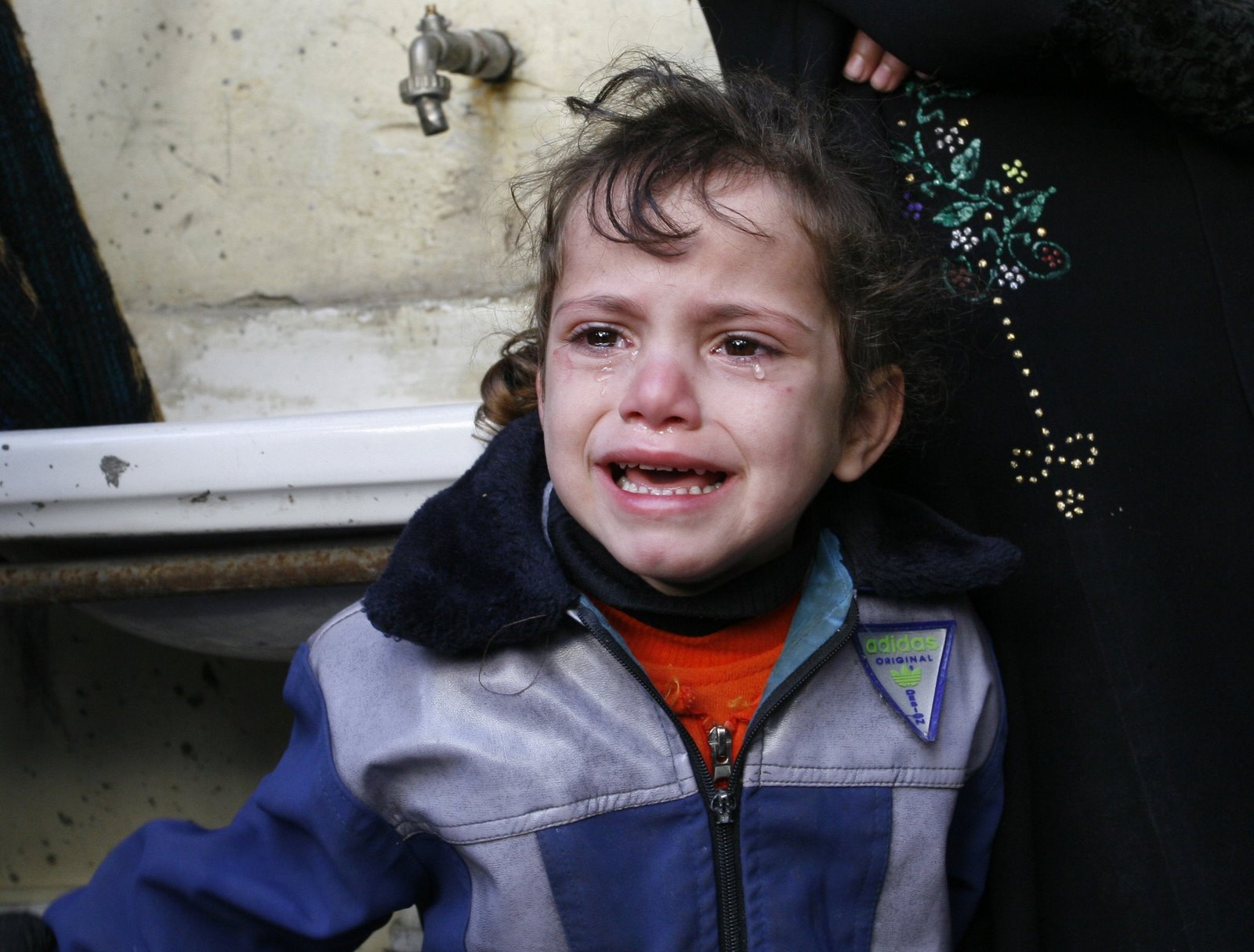


 Posts
Posts